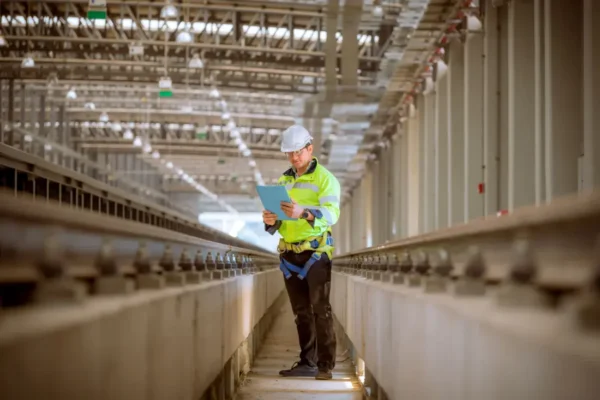
Getting the right site manager on a project is one of the decisions that shapes everything downstream. The wrong call costs time, creates programme risk, and puts pressure on every other trade on site. The right call keeps the job moving.
The question most construction businesses face is not whether they need strong site leadership. It is how to secure it. There are three main routes: direct hire, fixed-term contract, and labour hire Melbourne and beyond. Each carries different cost structures, timelines, and obligations. This guide lays out when each option makes sense.
Key Takeaways
- Direct hire works best when the need is ongoing, the business has pipeline certainty, and building institutional knowledge matters.
- Labour hire is the stronger option for defined project phases, surge demand, or when you need a site manager deployed quickly without the recruitment overhead.
- Fixed-term contracts sit between the two: faster than permanent hire but with employment obligations that labour hire removes entirely.
- Under Australian WHS legislation, both you and the labour hire provider carry concurrent duties as PCBUs regardless of how the engagement is structured.
- Fast Labour Hire places accredited site managers across Melbourne, Sydney, Brisbane, and beyond, with most placements confirmed within 48 hours.
The Role: What Site Leadership Actually Covers on a Project
Before the hiring decision, the role needs to be defined clearly. A construction site manager is accountable for the day-to-day delivery of a project: programme, subcontractor coordination, quality, safety, and site administration. The role sits between the project director and the trades on the ground.
Core Responsibilities
A site manager runs the programme. They coordinate the sequence of trades, manage the site induction process, maintain the site safety management plan, and liaise with the principal contractor. They are the first call when something goes wrong and the person who stops it from compounding.
Below that level, a leading hand or foreperson handles the day-to-day supervision of specific crews.
What a Site Manager Is Not
A site manager is not a general labourer with authority added on. The position requires demonstrated experience coordinating multiple subcontractors simultaneously, reading and interpreting construction drawings, and managing programme against budget. Placing someone in the role without that depth creates risk across the whole project.
Direct Hire vs Labour Hire: How the Two Options Compare

Both direct hire and labour hire can deliver a capable site manager. The right choice depends on the project timeline, the budget structure, and how much employment admin your business wants to carry.
| Factor | Direct hire | Labour hire |
|---|---|---|
| Speed to hire | Weeks to months (advertising, interviews, references) | Days to weeks (pre-vetted, ready to deploy) |
| Employment cost | Salary, super, leave, redundancy exposure | Inclusive hourly rate; no leave or redundancy liability |
| Project fit | Best for ongoing or permanent need | Best for defined project phase or surge demand |
| Compliance admin | Employer carries payroll, super, workers comp | Agency carries payroll, super, workers comp |
| Flexibility | Notice period required to exit arrangement | Engagement ends when the project phase ends |
| Institutional knowledge | Builds over time; stays with the business | Limited to project duration; exits with the engagement |
The Cost Structure Difference
Direct hire carries a fully-loaded employment cost. Beyond the salary, the employer pays superannuation, annual and personal leave, long service leave accrual, and potential redundancy exposure when the project ends. For a senior site manager earning above $120,000, the true employment cost can run 20 to 25 per cent above base.
Labour hire compresses that into a single hourly rate. The agency carries payroll, superannuation, workers compensation, and leave obligations. You pay the rate and manage the person on site.
That works well when the engagement has a defined end date, because it removes the redundancy exposure that comes with a direct hire you no longer need once the project is done.
The Speed Difference
Advertising, shortlisting, interviewing, reference-checking, and onboarding a directly-employed site manager takes four to eight weeks on a good run. In a tight market, it takes longer.
A specialist labour hire provider with an existing network can confirm availability and produce a shortlist within days. For most project types, placement and site start follow within a week.
That gap only becomes apparent when a programme start date arrives and the role is still open. Fast Labour Hire places site managers across Melbourne, Sydney, Brisbane, and nationally, with most placements confirmed within 48 hours of the brief.
When Does Direct Hire Make Sense for a Site Manager?
Direct hire is the right structure when the need is stable, the pipeline is clear, and the business has the capacity to absorb the employment overhead.
You Have Ongoing Work
If your business runs multiple projects in parallel and always needs a site manager in the field, a permanent hire builds something that labour hire cannot: institutional knowledge.
Someone employed directly and working across two or three projects learns your systems, your subcontractor relationships, and your quality standards. That accumulates value over time in ways that a succession of labour hire placements cannot replicate.
Pipeline Certainty Over 12 Months
Direct hire is a long-term commitment. If you can see twelve months of confirmed work ahead, a salary often makes more sense than a sustained labour hire arrangement. For most project types, the maths start to favour direct employment once the same skilled role is needed continuously for six months or longer.
Culture and Continuity Matter
Some projects and some clients benefit from consistency of leadership. A person present from mobilisation through to practical completion builds relationships with the principal contractor and the subcontractor base.
That continuity reduces friction and improves delivery in ways that are difficult to quantify but easy to notice when they are missing.
When Does Labour Hire Make Sense for a Site Manager?

Labour hire for a site manager is the right call when speed, flexibility, or project specificity drives the decision. It becomes the obvious choice when the project has a defined end date. Fast Labour Hire places site managers and forepersons across all project types, from residential builds to large commercial and infrastructure projects.
Project-Phase Coverage
Many construction projects have periods of peak intensity where senior site leadership is critical and periods where the level of management required drops. Labour hire lets you scale site leadership to match the phase.
Bringing in senior site leadership for the structural phase and stepping back to a foreperson once the project reaches fit-out is a legitimate and cost-effective structure.
You Need Someone Immediately
When a site manager leaves mid-project or when a project accelerates faster than planned, the gap is immediate. A direct recruitment process cannot fill it in the timeframe the programme demands. Labour hire can.
A specialist provider with a vetted network of available site managers can respond to a same-week or next-week start far more reliably than an open market search.
You Want to Trial Before You Hire
Some businesses use labour hire as a pathway to permanent employment. A candidate placed through labour hire can be assessed over several months before the business makes a long-term commitment.
If the fit is right, the conversation about direct employment is straightforward. If it is not, the engagement ends with the project phase without the legal complexity of a separation.
The Project Is Fixed-Term by Nature
Government infrastructure projects, civil contracts, and large commercial builds often have defined completion dates. Directly employing a site manager for a project that finishes in fourteen months creates a redundancy obligation when the project ends. Labour hire removes that exposure entirely.
The agency is the legal employer, and when your project finishes, the engagement concludes with it. The same applies to construction operators and specialist roles at every level.
Fixed-Term Contracts: A Third Option Worth Understanding
Fixed-term contracts sit between direct hire and labour hire in both structure and risk profile. They give a business more control over the terms of the relationship than labour hire, but they carry employment obligations that labour hire does not.
How Fixed-Term Contracts Work
Under the Fair Work Act, a fixed-term contract must specify a clear end date or an objective completion condition. The employee receives the same minimum conditions as a permanent employee during the contract: superannuation, leave entitlements, and notice requirements.
When the contract ends at the agreed point, no further obligation exists. That is the important distinction from an open-ended employment arrangement.
The 2024 Fixed-Term Contract Reforms
Changes to the Fair Work Act from 2023 and 2024 restricted the use of consecutive fixed-term contracts. A fixed-term contract cannot exceed two years, including any extensions.
Engaging the same person on successive fixed-term contracts to fill what is effectively a permanent need risks conversion to ongoing employment. Legal advice before structuring a fixed-term arrangement for a site manager is advisable.
When Fixed-Term Makes Sense Over Labour Hire
Fixed-term contracts give the business direct control over the terms, conditions, and remuneration of the engagement. If you have a specific site manager in mind, a fixed-term contract is appropriate. If you need someone vetted and deployed without the sourcing overhead, labour hire is the more practical option.
The key distinction is whether you are managing the employment or delegating it. Fixed-term contracts keep it with you. Labour hire moves it to the agency.
WHS Obligations: What the Host Employer Carries Regardless

The employment structure does not change your WHS obligations as the host. Under Australian work health and safety legislation, both you and the labour hire agency are classified as Persons Conducting a Business or Undertaking (PCBUs), each carrying concurrent, non-transferable duties.
Both Parties Are PCBUs
The Safe Work Australia PCBU framework provides the framework. The host manages the work environment and the day-to-day direction of the person on site. The agency ensures that person is qualified, inducted properly, and deployed safely. Neither obligation cancels the other.
What This Means in Practice
Even when a worker is placed through labour hire as a site manager, the responsibility for the work environment rests with the host. If a subcontractor is working unsafely on your site, the labour hire site manager has both the authority and the obligation to address it. You cannot deflect that duty to the agency.
This is one reason the calibre of who gets placed matters. Fast Labour Hire places site managers with verified construction credentials, relevant high risk work awareness, and demonstrated experience managing the safety management system on complex projects.
Frequently Asked Questions
What qualifications should a site manager have in Australia?
Every construction site manager should hold a White Card, a relevant trade or construction management qualification, and demonstrated experience managing projects at scale. Senior roles typically require a Certificate IV or Diploma in Building and Construction, or a construction management degree.
High-rise and complex structural projects may require additional qualifications. Fast Labour Hire verifies qualifications and references for every site manager before every placement.
How long does it take to find a site manager through labour hire?
Most specialist labour hire providers can produce a shortlist of available, vetted site managers within 24 to 48 hours of a clear brief. Placement and site start can follow within a week for most project types.
A direct hire process routinely takes four to eight weeks from advertising to start. In a programme-driven environment, that difference is not marginal.
What is the difference between a site manager and a project manager in construction?
A site manager covers day-to-day delivery on the ground: subcontractor coordination, programme management, safety, and site administration. A project manager operates at a higher level, managing the overall contract, client relationships, financial reporting, and risk. On smaller projects, one person may fill both roles. On larger projects, they are distinct positions with different accountabilities and seniority levels.
Can I use labour hire for a site manager on a government project?
Yes. Labour hire is a standard workforce arrangement across government-funded construction projects, including infrastructure, education, and health sector builds. The relevant procurement requirements apply at the contract level between the principal and the head contractor, not to the employment arrangement of individual workers. Fast Labour Hire places skilled tradespeople and site leadership across government and private sector projects nationally.
What does a site manager on labour hire cost?
Rates vary based on experience, project type, and state. A senior site manager through labour hire in Melbourne, Sydney, or Brisbane will typically carry a higher rate than regional placements, reflecting demand and cost of living.
The rate is all-inclusive: the agency covers super, workers compensation, and leave. Contact Fast Labour Hire for a fixed quote against your specific project brief.
Fast Labour Hire: Site Leadership Placed Across Australia
Fast Labour Hire provides experienced site leadership for construction projects across Melbourne, Sydney, Brisbane, Geelong, Gold Coast, and Adelaide.
We also place skilled tradespeople, general labourers, and construction operators across all project types. Tell us your project scope, location, and when you need them. We will confirm availability within 24 hours.